If you're looking at an overgrown hedge and wondering how much it will cost to get it back into shape, the answer depends on much more than its length. Hedge trimming in Sydney can range from a straightforward maintenance cut on a small front hedge to a substantial reduction involving tall access equipment, multiple workers and a considerable amount of green waste. For that reason, a good quote should be based on the hedge itself rather than a generic hourly or per-metre rate.
The main things that determine the cost are the height and length of the hedge, its condition, access to the property, the amount being removed and the finish you want to achieve. Understanding those factors makes it much easier to compare quotes — and to understand why two apparently similar hedges can cost very different amounts to maintain.
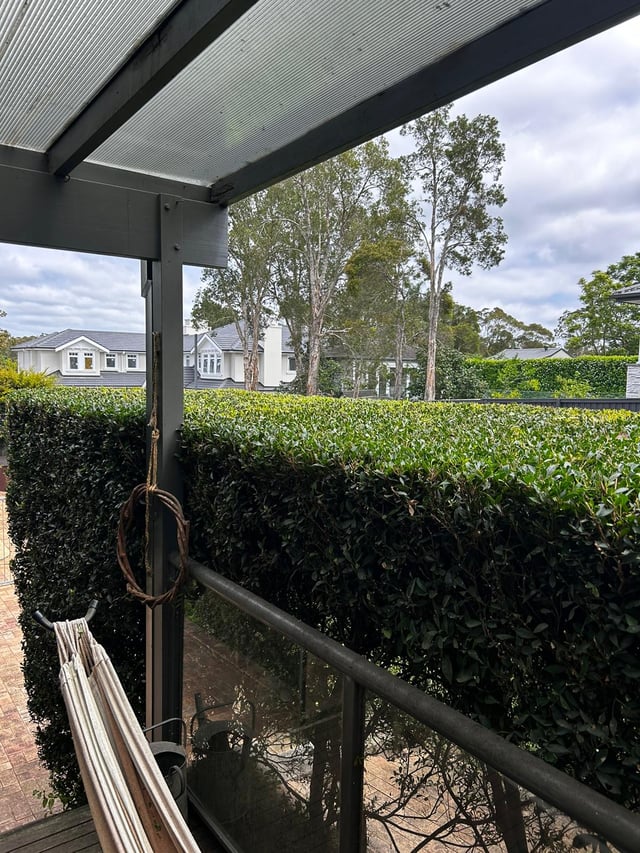
1. Hedge height. Height is one of the biggest factors. A hedge that can be comfortably trimmed from ground level is very different from a tall boundary hedge requiring ladders, platforms or specialist access equipment. As height increases, the job generally becomes slower and more involved, and there is also considerably more hedge to trim than might initially be obvious. A long hedge two metres high has a top and two substantial faces to maintain; increase that height significantly and both the cutting area and the volume of material climb quickly. Tall hedges therefore need to be assessed on the complete job rather than simply the number of linear metres along the boundary.
2. Hedge length. Length naturally affects the amount of work involved. A short Murraya beside an entrance might be relatively straightforward, while a Lilly Pilly privacy hedge extending around several boundaries can represent a considerable amount of trimming. But length shouldn't be considered by itself. Ten metres of regularly maintained hedge with easy access may be substantially easier to trim than ten metres of very tall, dense or neglected hedge — which is why quoting purely by the metre can be misleading.
3. How overgrown is the hedge? This is often the biggest difference between a maintenance trim and an expensive hedge job. A hedge that is trimmed regularly normally requires only light growth to be removed: the shape is already established and we're essentially maintaining it. Leave the same hedge for a long period and the job changes. New growth becomes longer and heavier, branches thicken, and the hedge may spread over paths, gardens, fences or neighbouring properties. Instead of simply following an existing line, we may need to establish the shape again. Regular trimming is usually more economical over the long term than repeatedly allowing a hedge to become badly overgrown and then trying to recover it.
Hedge trimming and hedge reduction are different jobs. Trimming generally means maintaining an established height and shape. A hedge reduction means significantly changing that height or size. Removing the season's growth from a two-metre hedge is trimming; taking a four-metre hedge back towards two or three metres is a reduction. Reductions involve thicker branches, considerably more material and decisions about how far the particular species can safely be cut.
Some hedges tolerate substantial reductions extremely well and others don't. Murraya, Lilly Pilly and Viburnum can often respond well to carefully planned work — our guide on how far can we remove covers this in detail. Conifers such as Leighton Green require much greater caution, because cutting deeply into old bare wood can leave permanent areas that don't regrow. Sometimes the best approach is a staged reduction rather than trying to reach the final height in one visit.
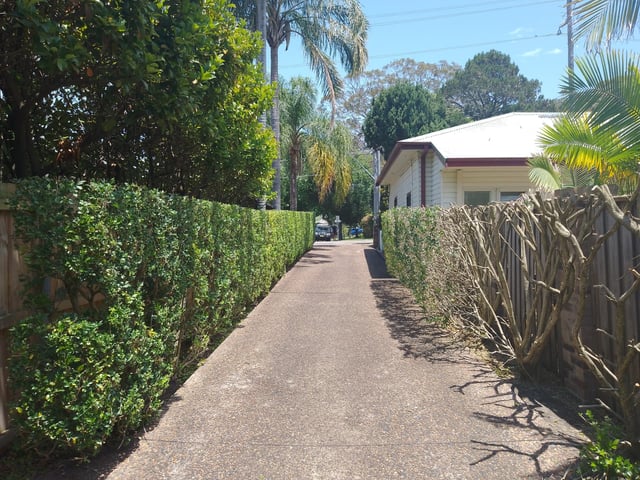
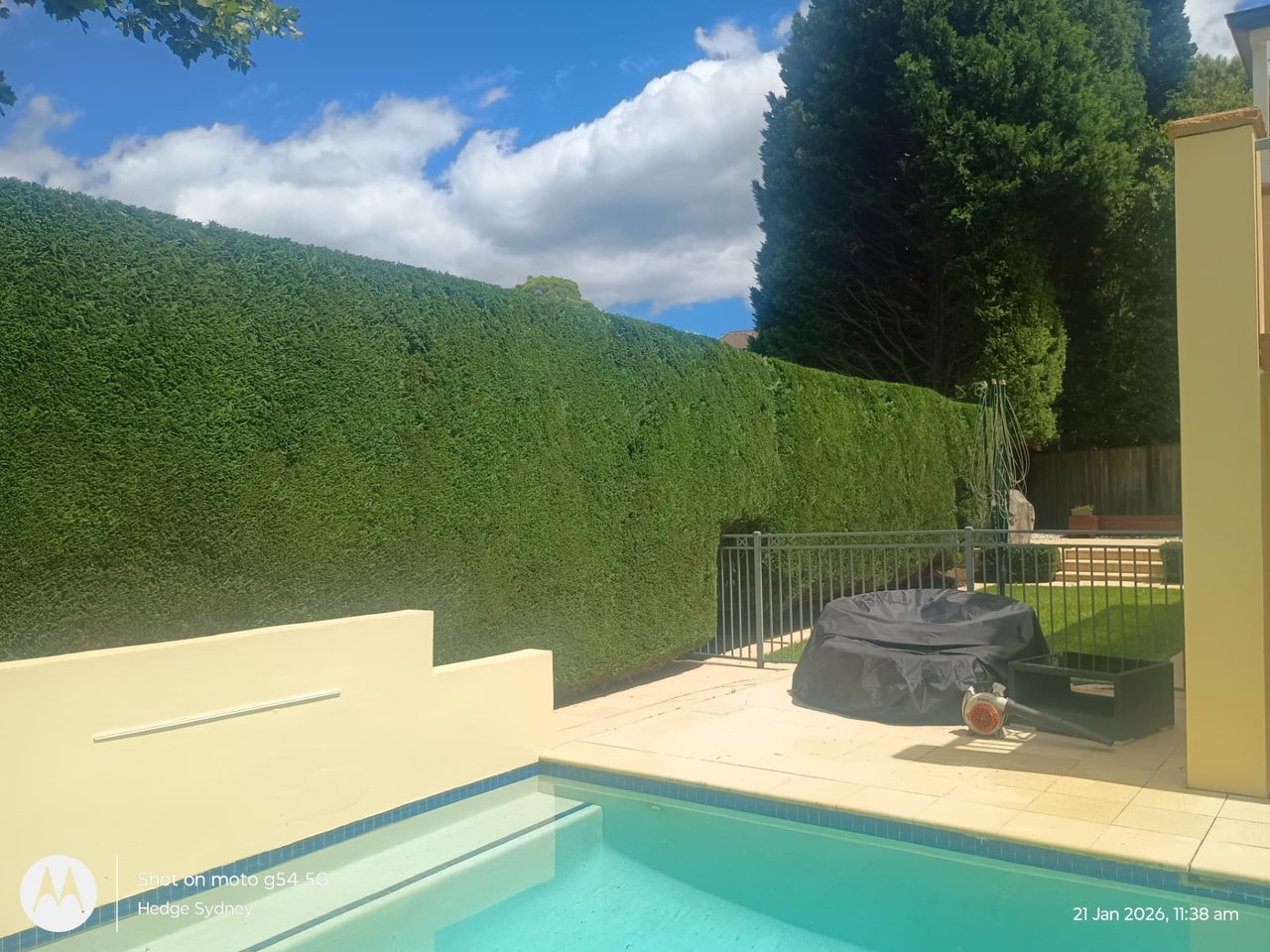
4. Access around the hedge. Access is one of the most overlooked parts of a quote. Consider two identical hedges: one has level lawn running alongside it with clear access from the driveway; the other sits behind a swimming pool, above a retaining wall or between a narrow garden bed and a boundary fence. They might contain exactly the same amount of hedge, but they're not the same job. We look at whether there is safe access along both sides, the ground underneath, nearby beds and structures, and how equipment and cut material will move through the property. Narrow side passages, sloping blocks, retaining walls, pools and established gardens are common across the North Shore and Northern Beaches — good access makes trimming faster, difficult access takes more planning and time.
5. How much green waste will the hedge produce? The cutting is only part of the job; everything that comes off the hedge has to go somewhere. A light maintenance trim might produce surprisingly little waste, while a substantial reduction on a long boundary hedge can produce an enormous pile of branches and foliage. That material has to be collected, moved from the garden and either processed or removed, and the further the hedge is from vehicle access, the more handling is involved. At Hedge Sydney, green waste removal is included in the agreed quote unless we've arranged something different with you. Once the hedge is finished we rake and blow down the surrounding areas and take the clippings away, so the garden looks better when we leave.
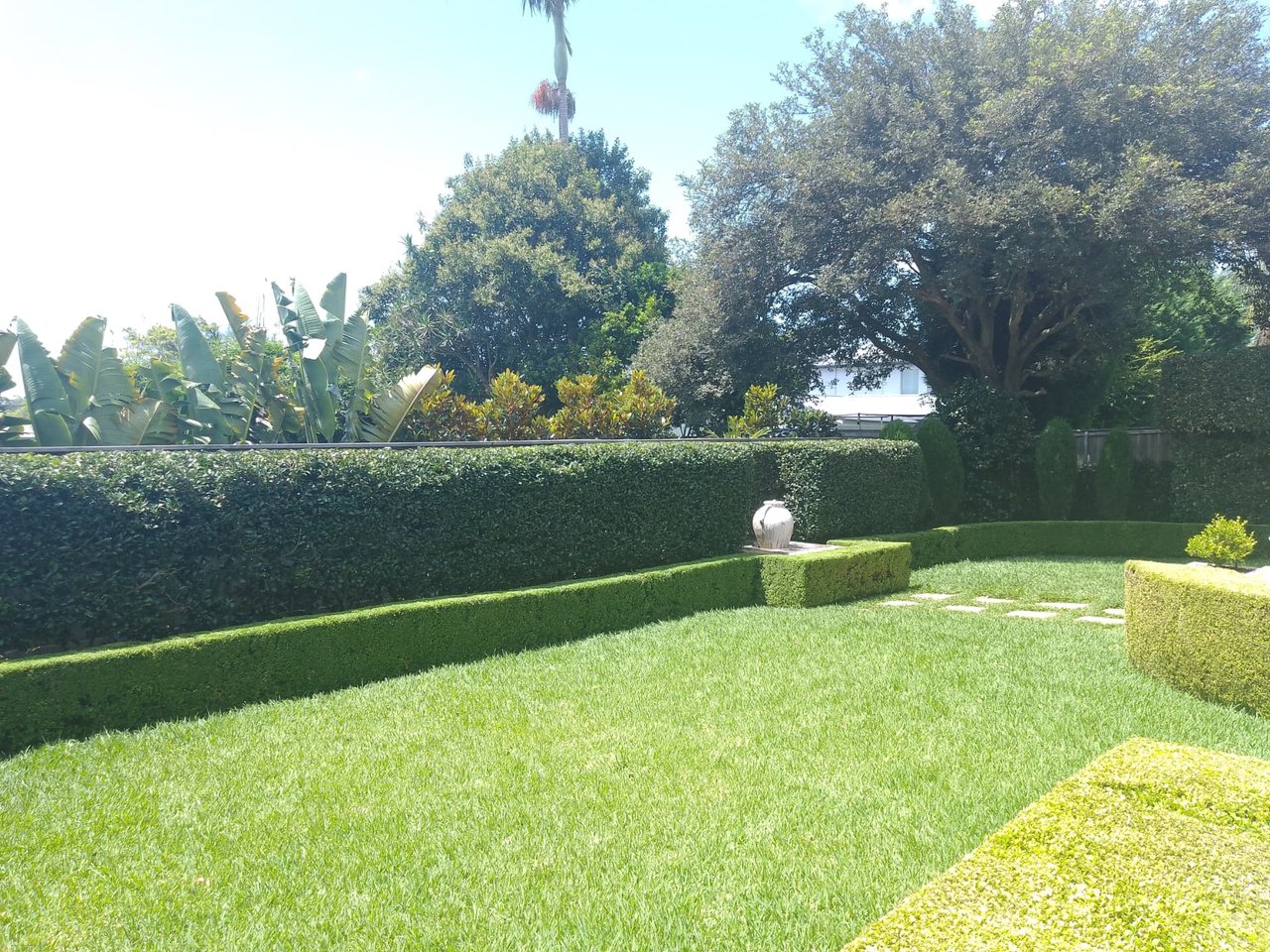
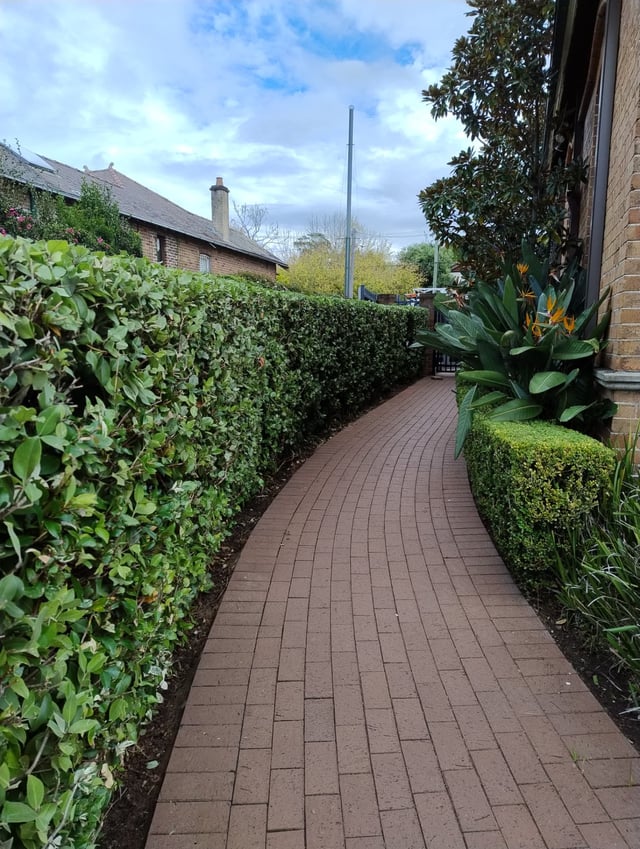
6. The finish you want. Not every hedge needs the same finish. Some screening hedges simply need to be contained. Formal hedges are different: straight tops, square corners and consistent faces require more care than simply removing excess growth. Where we're maintaining a formal hedge we work to an established line so each trim builds on the last. Regular trimming also encourages branching close to the outside of the plant, helping create the dense appearance people want from Murraya, Lilly Pilly, Viburnum and other formal screening hedges.
Does the type of hedge affect the price? It can. Murraya generally responds well to regular trimming and can create a very dense formal hedge. Lilly Pilly grows rapidly in warm weather and may need several trims through the year if you want a tight finish. Viburnum produces large leaves and vigorous growth and can generate considerable green waste when heavily reduced. Buxus grows much more slowly but is often maintained to a more precise shape. Leighton Green can form very large screening hedges, but reductions must be planned carefully because old bare growth doesn't reliably regenerate. The question isn't simply how much can we remove — it's how much can we remove while leaving you with a healthy hedge.
Is it cheaper to have hedges trimmed regularly? Usually, yes. Think of hedge maintenance as controlling new growth rather than repeatedly rebuilding the hedge. Once a hedge reaches the height and shape you want, regular light trimming keeps it there. Fast-growing hedges may need more attention during spring and summer, while slower species require less. Regular maintenance also means the hedge looks good throughout the year rather than alternating between freshly cut and badly overgrown. For larger residential properties, strata complexes and commercial sites, scheduled maintenance makes considerably more sense than waiting until the hedges become a problem.
Why very cheap quotes aren't always cheaper. When comparing quotes, make sure you're comparing the same scope of work. Does the quote include both sides of the hedge and the top? Is green waste removed and is cleanup included? Is the contractor insured? What finished height has actually been agreed, and for reductions, has any thought been given to whether the hedge will recover from the proposed cut? A lower quote can look attractive until waste removal, extra labour or parts of the hedge are added later. We prefer agreeing on the complete job first, so you know the finished height, the work being carried out and the price before we start.
Can hedge trimming be quoted from photographs? Often, yes. For straightforward residential work, a few good photographs tell us most of what we need to know. Ideally they should show the complete hedge, its approximate height and length, both sides where possible, the ground and access around it, and any gates, pools, retaining walls or other obstacles. Tell us the suburb and roughly what you'd like done. For larger reductions, complicated access or commercial properties, we'll normally inspect the site before confirming the work.
How can I keep my hedge trimming costs down? The simplest answer is don't let the hedge get too far away from you. Once you've established the height you want, maintain it. Regular light trimming is easier on the plant, produces less waste and avoids the substantial work involved in recovering a hedge that has grown metres beyond its intended size. It also prevents hedges spreading into paths, neighbouring properties and gutters, which makes future access harder. Choosing a realistic finished height matters too — a dense, well-maintained hedge at a manageable height can provide excellent privacy while being far easier to look after.
So, how much will your hedge cost to trim? Without seeing it, an exact figure isn't particularly useful — a small regularly maintained hedge and a long overgrown boundary screen are completely different jobs. What we can tell you is what determines the quote: height, length, condition, access, the amount being removed, green waste and the required finish. Once we can see those things, pricing becomes straightforward. At Hedge Sydney we provide free fixed-price quotes across Sydney, with regular work throughout the North Shore, Northern Beaches and surrounding suburbs.
Whether it's a regularly maintained Murraya, an overgrown Lilly Pilly boundary hedge or a large hedge that needs to be brought back to a manageable height, send us a few photographs, the suburb and a rough idea of the hedge height and length. We'll assess whether you're looking at routine trimming, reshaping or a larger reduction, recommend the appropriate approach and give you a clear fixed price before work begins.