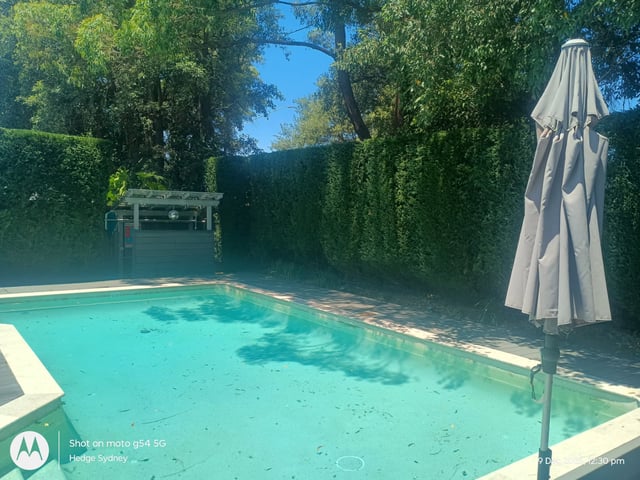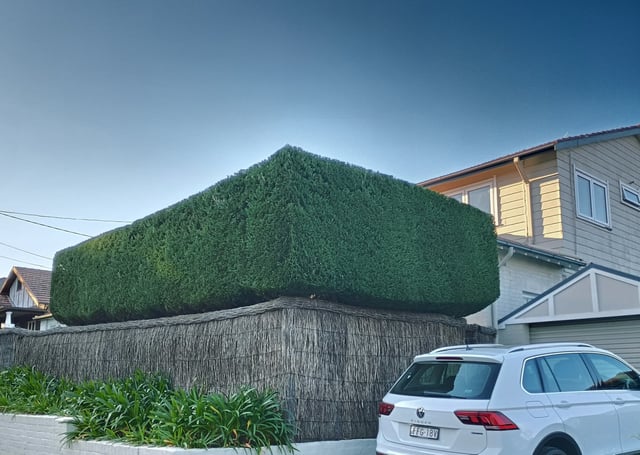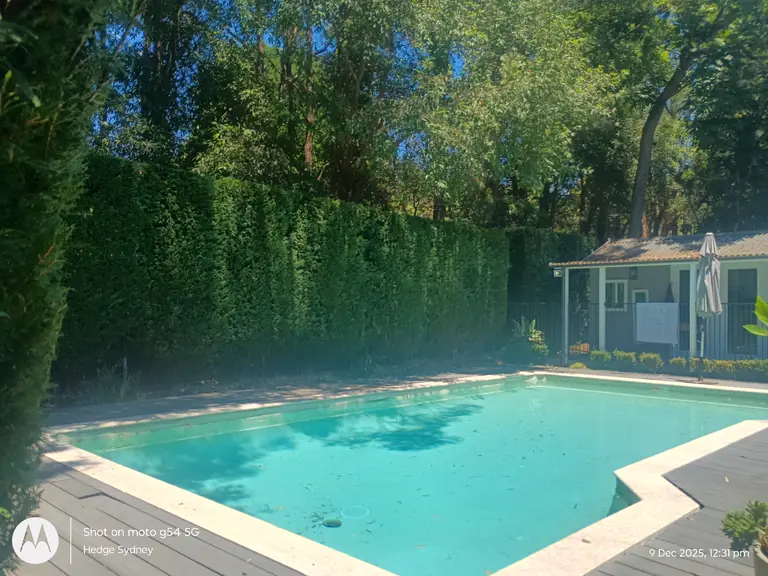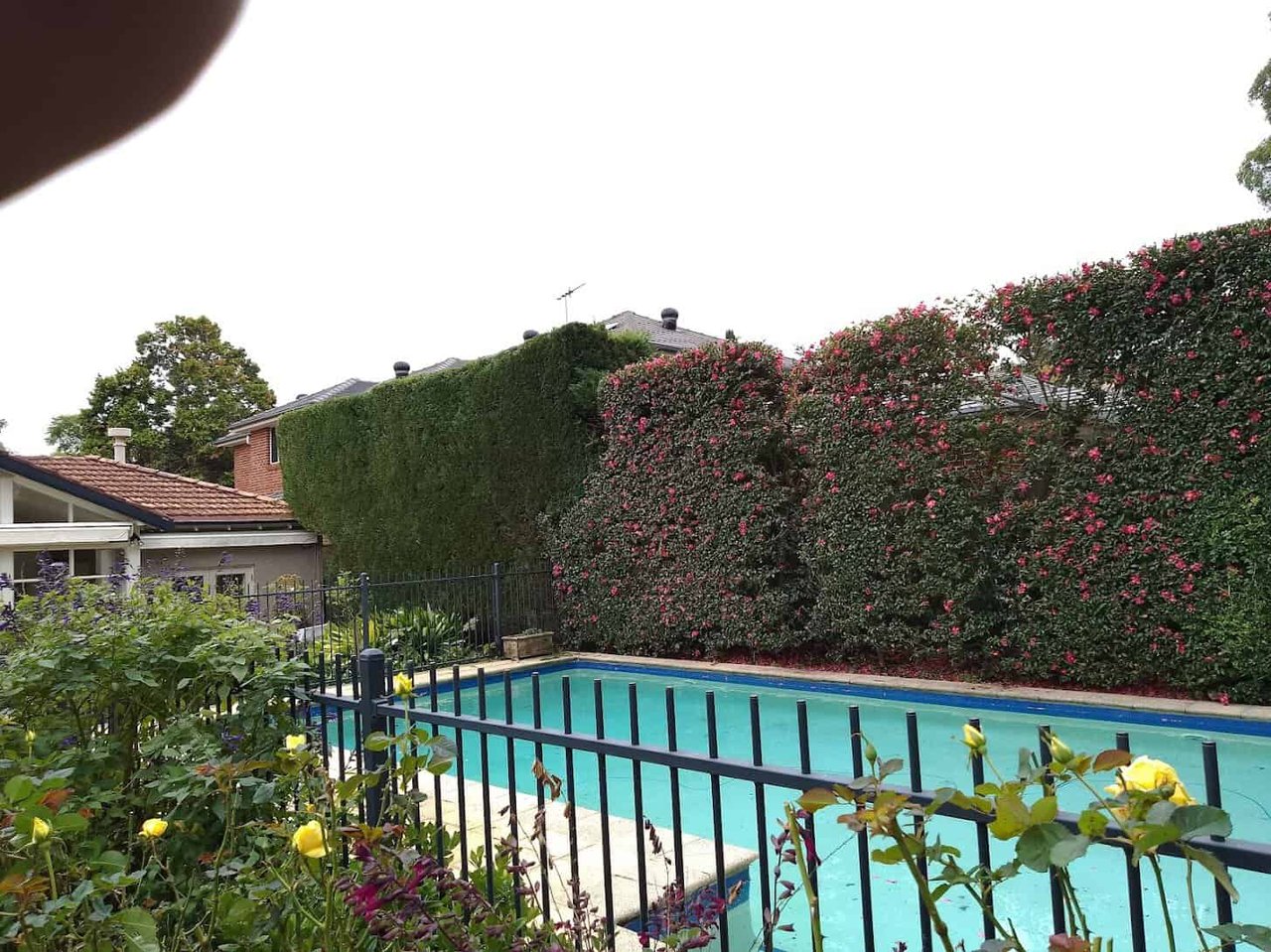
Leighton Green (Cupressocyparis leylandii 'Leighton Green') is prized for its rapid growth and upright, dense habit. It is often planted as a privacy screen around Sydney properties. However, its fast growth can quickly create a hedge that is taller than desired.
The important thing to know is that Leighton Green does not regenerate from old, leafless wood. If you cut back beyond the green foliage, the branch is likely to die and leave a permanent brown gap. For this reason, height reduction must be done gradually and conservatively.
Reduce the top by no more than 20–30 cm at a time, always cutting back to a point where green growth remains. Allow the hedge to regrow and fill in before taking more off. Depending on how much height needs to be removed, this process can take two or three rounds over a couple of years.
If the hedge is already bare at the base or far too tall for its position, removal and replanting with a more manageable species may be the better long-term option. A professional assessment can help you decide whether reduction or replacement is the most cost-effective choice.
The reason for that limitation is physiological. Like most Cupressaceae, Leighton Green carries very few dormant buds on older, leafless wood, so a cut into the brown interior has nothing to reshoot from. The green shell you see is effectively the whole living surface of the hedge. This is why the safest reductions are done regularly and pre-emptively, before the hedge outgrows the position, rather than as a rescue job on a screen that has already run to six or eight metres.
Sides deserve as much attention as the top. Leighton Green widens roughly as fast as it climbs, and a hedge allowed to bulge will eventually need side cuts that expose bare wood permanently. Trim the flanks lightly each year with a slight taper — wider at the base, narrower at the top — so the lower foliage keeps getting light. Two light passes a year, typically in spring and again in late summer, hold both height and width without ever reaching into old wood.
Also weigh practicality and safety. Tall conifer hedges are usually reduced with elevated access and produce a large volume of green waste, and in some Sydney council areas established screening vegetation over a certain height is subject to tree preservation controls, so it is worth confirming before major work. If the hedge is already bare at the base, leaning, or shading a neighbour's property, replacing it with a species that reshoots — Viburnum odoratissimum, Photinia or a Lilly Pilly cultivar — is often the more durable investment.