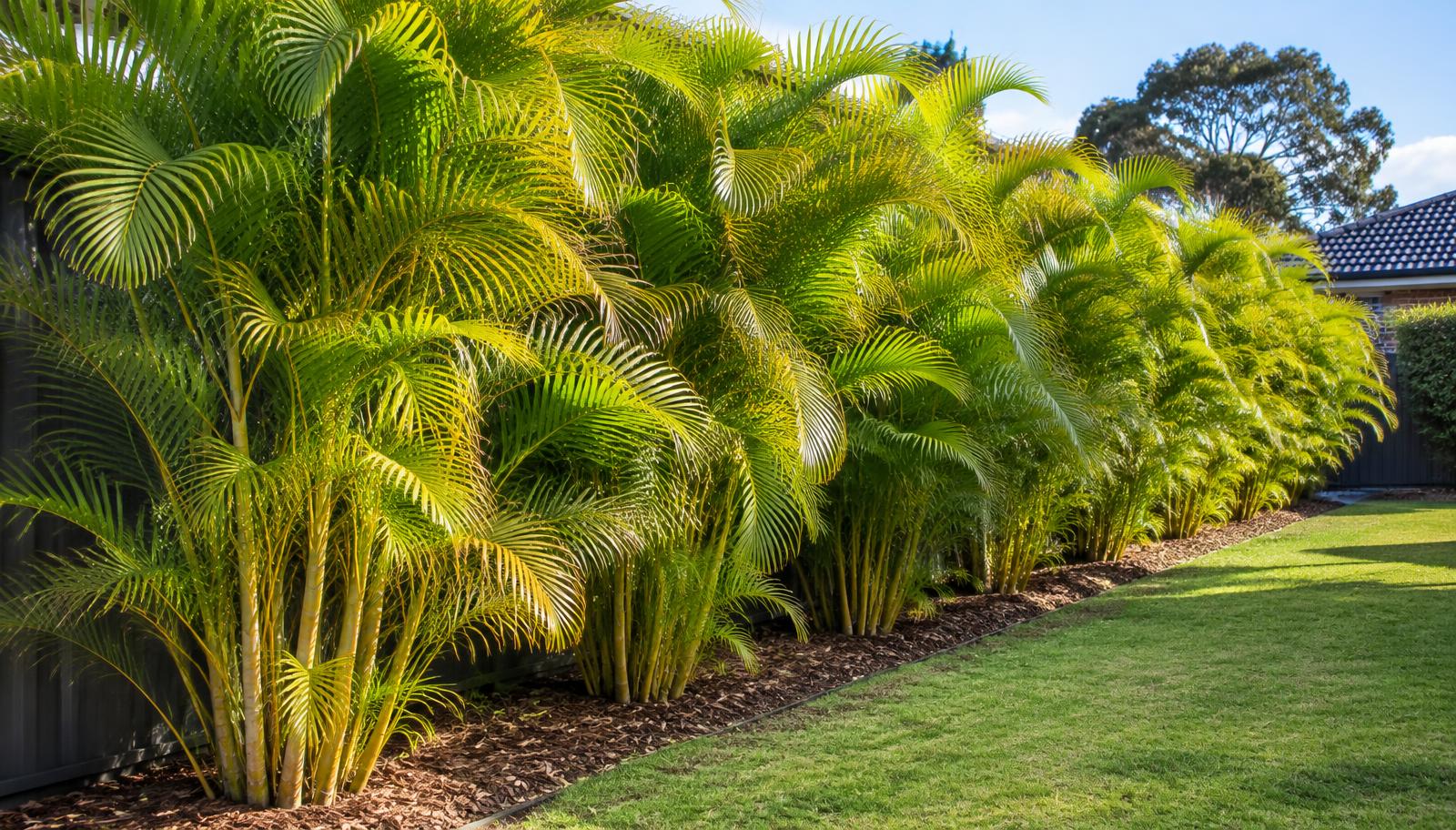
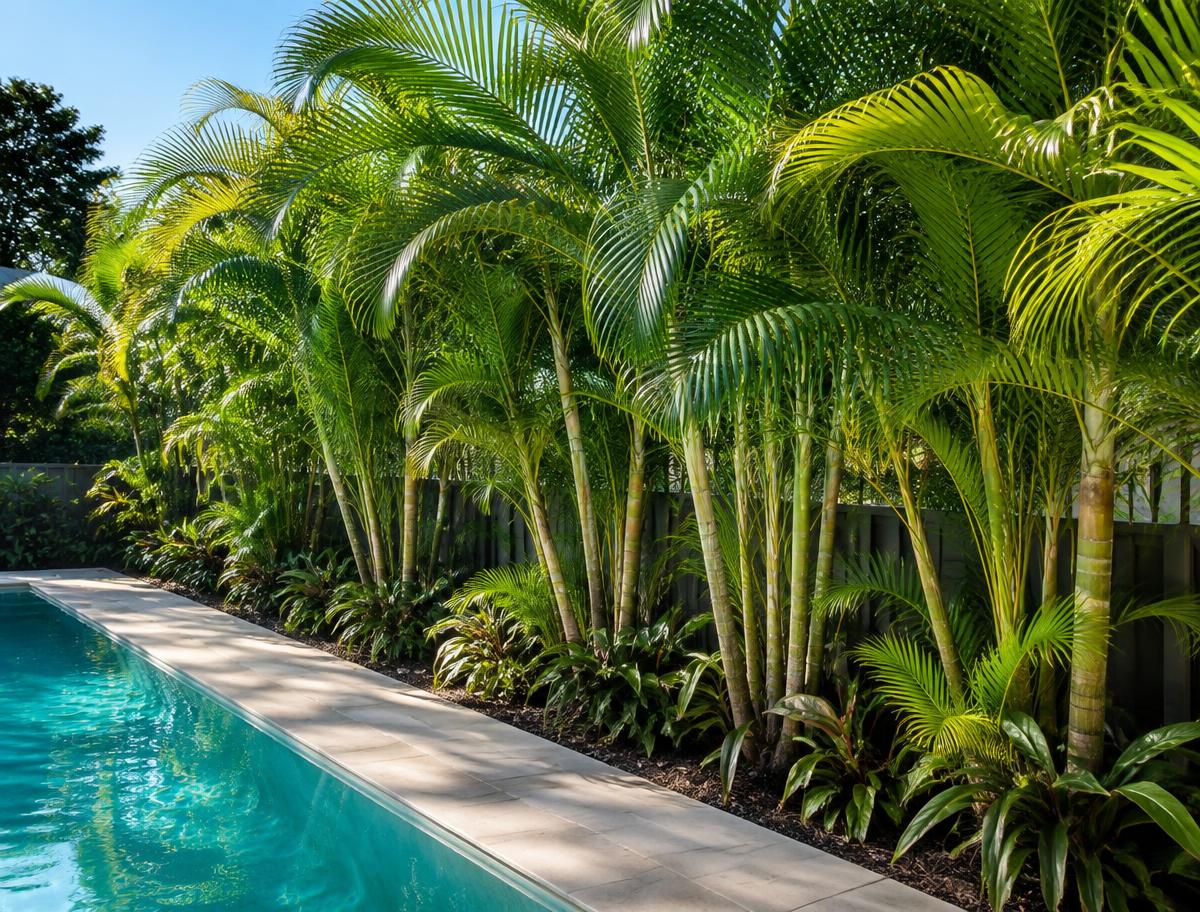
Golden cane palm (Dypsis lutescens) is one of the easiest ways to create a lush, tropical-looking privacy screen in Sydney. Instead of a formal clipped hedge, it grows as a cluster of slender, golden-green stems crowned with arching feather fronds, and when several plants are placed together they knit into a dense, rustling green wall. It is a favourite around pools, courtyards and fence lines precisely because it gives height and privacy without the hard, manicured look of a sheared hedge. At Hedge Sydney we supply mature golden cane palms in advanced 300 mm pots, so you can plant a screen that reads as established from day one rather than waiting years for small tubes to fill in.
Why it works so well as a screen. The secret to the golden cane's screening ability is its clumping habit. Each plant sends up multiple stems directly from the base, so there is never a bare trunk with foliage only at the top — the clump is dense from ground level to the crown of the fronds. New shoots continually emerge around the outside of the clump, thickening the screen year after year. The roots are non-invasive, which makes it safe along fence lines, near paving and around pool surrounds where a ficus or bamboo would eventually cause trouble, and the fine fronds filter wind and light rather than blocking it completely, so the screen moves gently in a breeze instead of acting like a solid sail.
Growing habits. Left unclipped, golden cane palms reach around 3 to 6 metres tall in Sydney's warm microclimates, with a clump spreading 1.5 to 2.5 metres across. Growth is fastest through the warm months — in good soil with regular water, expect well over half a metre of new height in a single growing season, plus a ring of fresh basal shoots each spring. The clump widens slowly over time as new canes emerge around the perimeter, which is worth remembering when you position plants against a fence: leave them a little breathing room and they will reward you with a fuller screen.
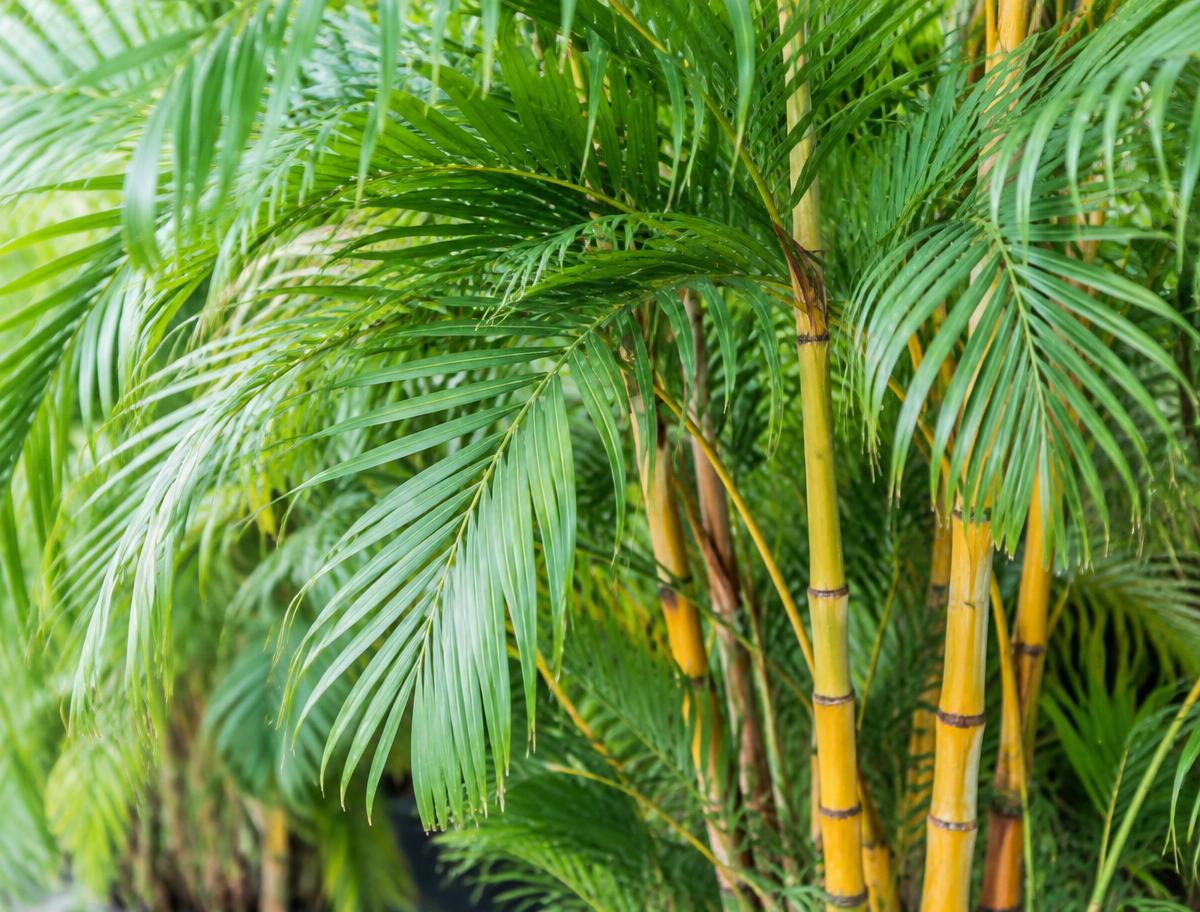
Where it grows best. Golden cane palms thrive in full sun to part shade. In shadier positions they still grow well but tend to stretch a little taller and darker green; in full sun the stems take on the bright golden colour that gives the palm its name. They prefer a sheltered, frost-free spot with well-drained soil enriched with compost, and once established they are remarkably tough — tolerating coastal salt winds and extended dry spells. In frost-prone pockets of Western Sydney the frond tips can brown in a cold winter, but the plant usually shrugs it off with the first flush of spring growth.
Planting and spacing a golden cane screen. For a continuous screen, plant golden cane palms 800 mm to 1 metre apart along the line you want to screen. Closer spacing closes the gaps sooner; wider spacing suits a softer, clumpier look where a fully joined wall is not the goal. Prepare the bed with plenty of compost, plant at the same depth the potting mix sits at, and keep the root zone mulched. Water deeply two or three times a week through the first summer — the single biggest factor in how quickly a screen fills in is consistent water while the plants establish. Our golden cane palm plant page has the full spacing and size details for the plants we supply.
Pruning and maintenance. Pruning a golden cane screen is a different job to trimming a conventional hedge — you never shear the fronds. Instead, the maintenance is selective: remove the oldest, tallest canes at the base with a clean cut when the clump gets taller or wider than you want, and snip off any fronds that have turned fully brown. Trimming just the brown tips with scissors keeps the screen looking fresh if winter or drought has singed the edges. Removing a few of the tallest canes each year is how you hold a screen at a working height of 2.5 to 3 metres rather than letting it run to its full 5 or 6.
Feeding and water. Golden cane palms are moderate feeders. A slow-release fertiliser in spring and again in late summer keeps the fronds a deep green, and a dose of magnesium (Epsom salts) corrects the yellowing older fronds that appear in Sydney's sandy or depleted soils. Established plants only need a deep soak during extended dry spells, but a screen grown for speed and density responds visibly to regular summer water.
Pests and problems. Golden cane palms are relatively trouble-free outdoors. Scale insects and mealybugs occasionally cluster on the stems and undersides of fronds, and the sticky honeydew they produce can lead to sooty mould — a healthy, well-fed palm usually outgrows light infestations, but persistent scale can be treated with horticultural oil. Yellowing fronds are far more often a nutrient issue than a pest issue, so check feeding before reaching for sprays.
How it compares with other hedge plants. Golden cane is not a replacement for a formal hedge — if you want a crisp, clipped box along a front boundary, Murraya or Lilly Pilly from our hedging plants range will do that far better. Where golden cane wins is softness and speed: a tropical, resort-style screen that needs no shaping, is safe near pools and paving, and reaches a useful height quickly. It also pairs beautifully with a clipped hedge behind or beside it, adding texture and height variation to a layered garden.
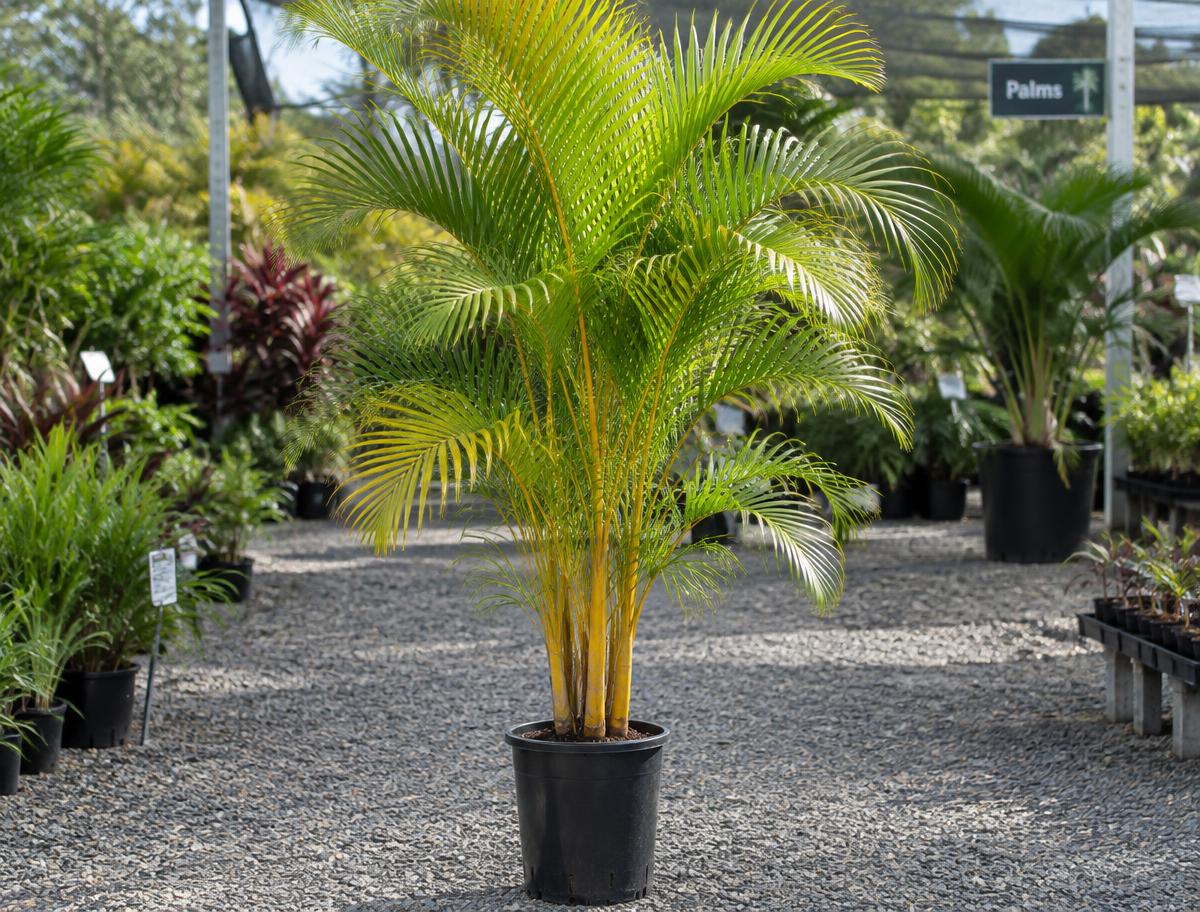
Mature plants for an instant screen. The most common frustration with palms is the wait — a small tube takes years to become a screen. Hedge Sydney supplies mature golden cane palms in advanced 300 mm pots, around 2.2metres tall, ready to plant straight into a screen with immediate presence. We can deliver to your property and install at the correct spacing, and our hedge trimming team can handle the selective pruning that keeps the screen at the height you want.
Golden cane palms for Sydney gardens. Fast, lush, non-invasive and almost maintenance-light, golden cane palms are one of the most rewarding screening plants for Sydney's climate. Give them sun, drainage and a little summer water, and they will turn a bare fence line into a private, tropical green wall within a couple of seasons.
If you would like mature golden cane palms supplied, delivered and planted — or advice on the right screening plants and spacing for your garden — contact us today for a free quote.