What is an instant hedge? If you want to soften a fence, screen neighbouring windows or make a garden feel more private, advanced hedge plants can give you a stronger starting point than smaller nursery stock. An instant hedge usually means buying established individual plants with more developed foliage, rather than planting young specimens and waiting for them to grow. It does not mean every gap disappears on planting day. The result depends on the actual plants, their spacing and the view you want to screen.
For Sydney buyers, the useful question is not simply which pot is biggest. It is which combination of variety, supplied height, canopy width and planting layout suits the site. A taller plant may help with an elevated sightline, while a bushier plant can be more useful beside a low fence. Begin with the current Advanced Hedge Plants range, then ask us to confirm the available batch before deciding.
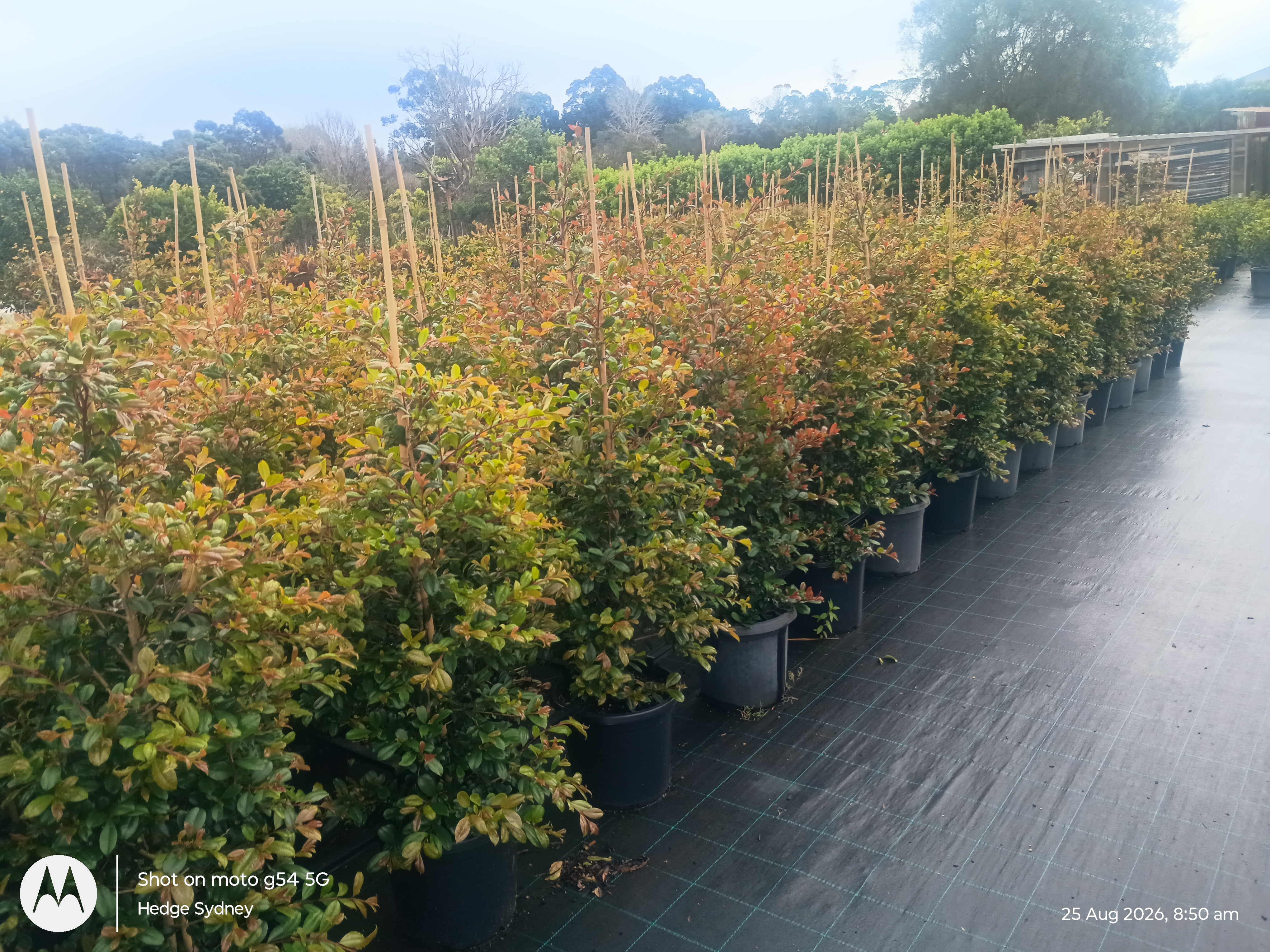
400mm vs 500mm: pot size is not plant height. These measurements refer to the diameter of the nursery container, not the height of the plant. A listing such as 500mm / 75L also identifies the container volume. Plants grown in the same pot diameter can have different heights and shapes across varieties and batches. Do not assume that every 500mm plant is taller than every 400mm plant, or that the container label guarantees a finished hedge height.
A 400mm option can be a practical balance between initial presence, budget and handling. A 500mm option may offer a larger starting plant, but compare the actual stock rather than the label alone. Check supplied height, foliage density near the base and canopy width. Where a listing says “Confirm on enquiry”, ask for current measurements and photographs. Also clarify how the nursery measures height, particularly whether it includes the pot.
| Buying consideration | 400mm pot | 500mm / 75L pot |
|---|---|---|
| Container label | 400mm refers to pot diameter | 500mm refers to pot diameter; 75L is the listed volume |
| Supplied plant height | Check the variety and current batch | Check the variety and current batch; not a universal height guarantee |
| Initial screening | Compare canopy width, height and density | Compare actual foliage coverage, not pot size alone |
| Handling and planting | Access and root-ball handling still matter | Plan for the potentially larger root ball and site access |
| Plant cost | Use current catalogue price or request a quote | Use current catalogue price or request a quote |
| Supply & install minimum | Five plants | One plant for 500mm or larger |
| Delivery | Quoted separately | Quoted separately |
Which size gives privacy faster? The best starting screen is the one whose foliage covers the relevant sightline. Larger stock can reduce the amount of growing needed, but height alone does not close sideways gaps. Warmth, sunlight, watering, drainage and formative pruning all influence establishment and density. We cannot promise a fixed number of weeks or months to full screening from pot size alone. Assess the initial coverage and allow for continued growth after planting.
Which Lilly Pilly variety should you choose? Start with the intended finished hedge, rather than selecting a cultivar solely because a large pot is listed. Consider available bed width, sunlight, the height you will maintain and how often you want to trim. The five Lilly Pilly options below have different characteristics. Their product pages show the current sizes, supplied-height information and pricing; availability should be confirmed when preparing your quote.
Lilly Pilly Resilience suits native privacy screening and larger boundary planting. The catalogue describes it as a selection bred for resistance to the psyllids that cause leaf blistering on susceptible Lilly Pillies. That resistance is useful, but does not remove the need to inspect new growth and maintain healthy plants. Compare its current 400mm and 500mm options against your desired sightline, rather than treating mature height as supplied height.
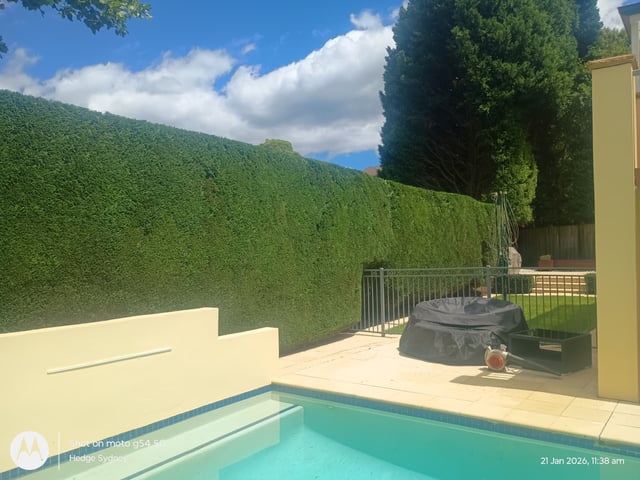
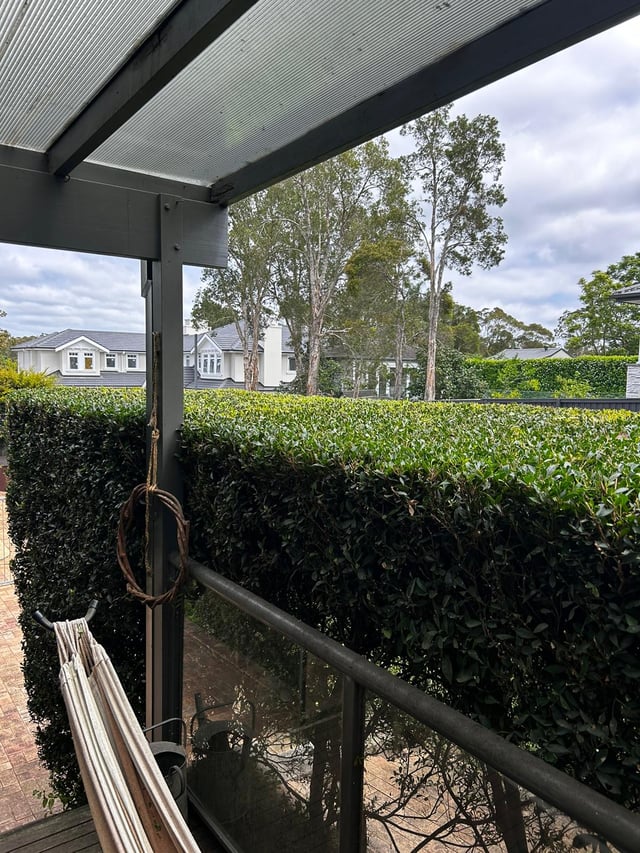
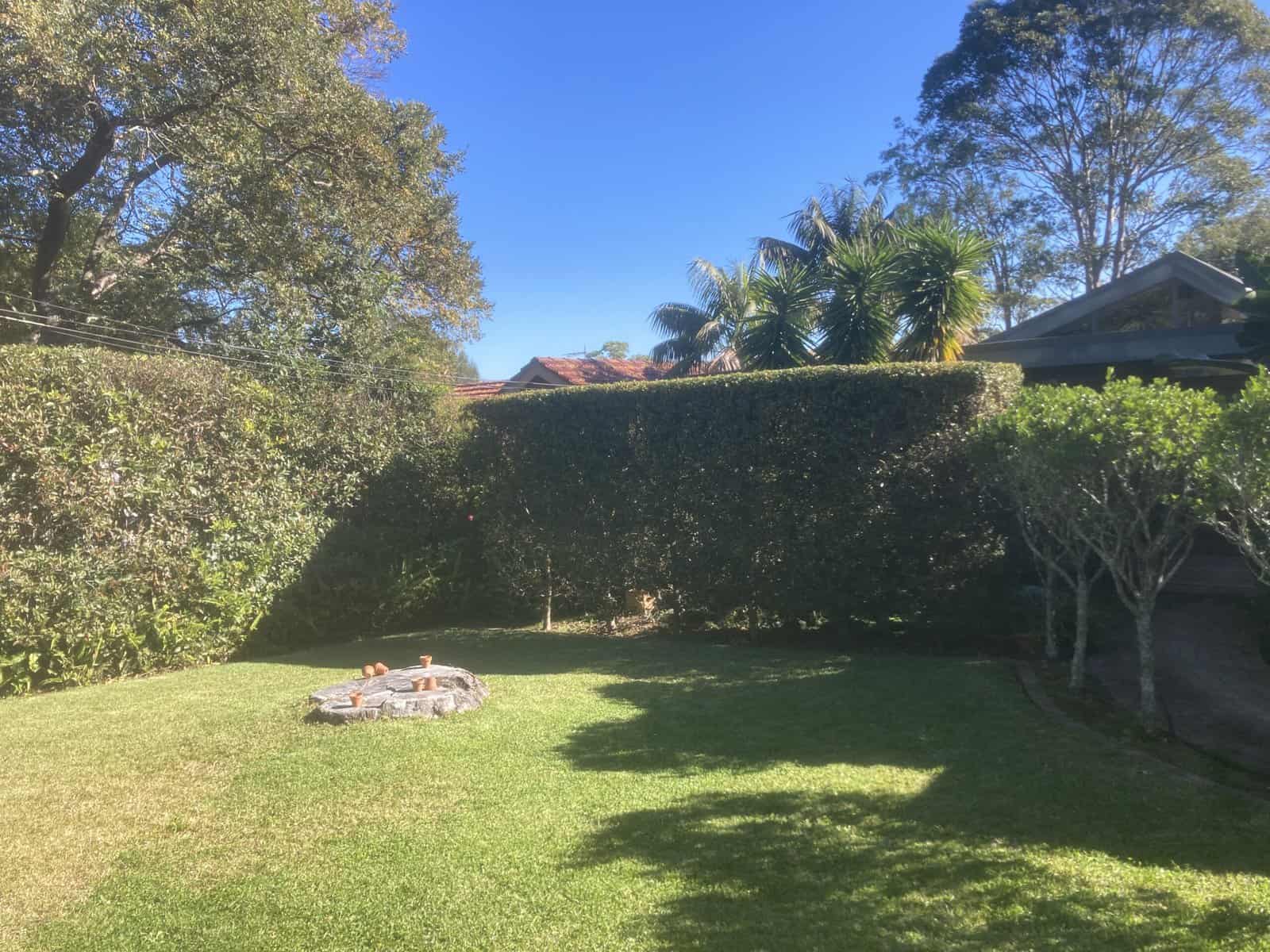
Lilly Pilly Backyard Bliss is another native hedging and screening option. Its catalogue describes a plant that can be maintained below its unclipped mature size through regular trimming. Think about the width you can accommodate as well as height. The real hedge photograph illustrates its use in a planted setting; it is not a promise that newly delivered plants will arrive with that same continuous canopy.
Lilly Pilly Baby Lilly offers compact, dense growth and suits clipped hedges and screening. “Baby” does not mean it will always remain tiny: pruning and site conditions determine the maintained result. Cherry Surprise adds distinctive cherry-red new growth against green foliage, making it worth considering where the hedge is also a visible garden feature. Compare their actual batch dimensions before choosing between them.
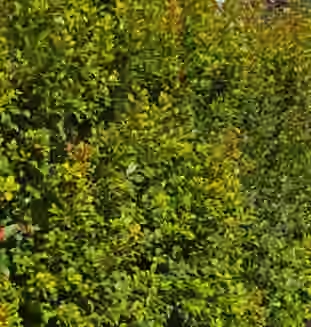
Lilly Pilly Firescreen is listed for hedging and screening and can grow into a substantial plant if left untrimmed. Confirm that the intended bed and maintenance plan suit it. Where the catalogue shows “Price on enquiry”, request a quote rather than interpreting the missing numeric price as a free plant. For any variety, confirm that enough matching plants are available for the whole run.
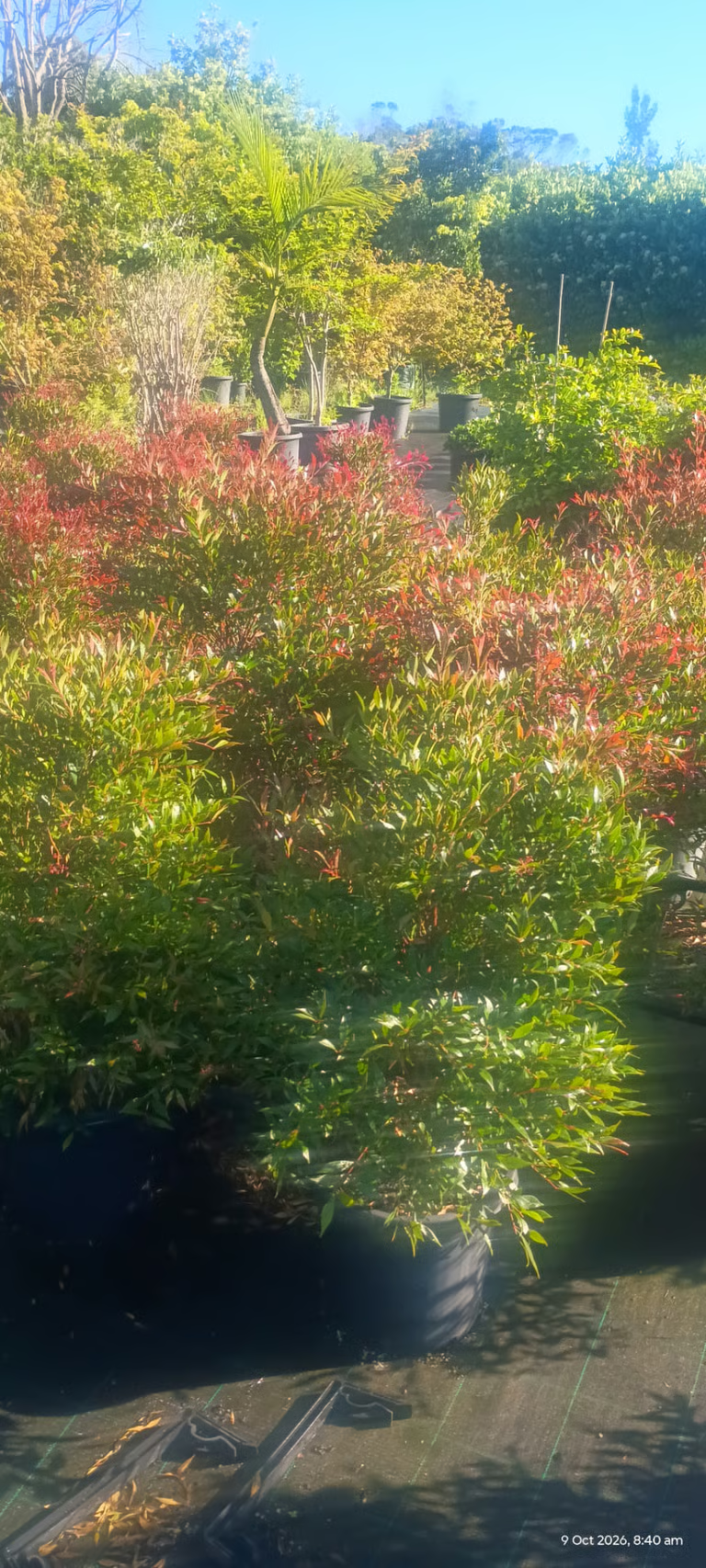
How many plants do you need for a 10-metre hedge? Use centre-to-centre spacing, not the gap between pot edges. As an illustrative layout, a 10-metre line with plants at both ends and 1-metre spacing needs 11 plants: ten intervals plus one endpoint. At a maximum 1.2-metre spacing, ten evenly spaced plants span the same line at approximately 1.11 metres between centres. These examples explain the arithmetic; they are not a spacing recommendation for every cultivar.
Actual numbers change with end setbacks, corners, gates, root-ball size and the supplied canopy. Closer planting can reduce initial gaps, but crowding plants is not automatically the best long-term solution. Send the usable planting length and photographs, and ask for a cultivar-specific layout. The hedge planner can help you explore a starting concept, with final spacing and quantities confirmed for the site and current stock.
Is advanced stock worth the extra cost? It can be attractive when a stronger initial screen matters more than the lowest upfront plant cost. Smaller plants remain a sensible option when you have time for growth. Compare the whole project: plant quantity, current supply price, delivery, access and installation. For a worked estimate, multiply the confirmed per-plant price by the agreed quantity, then add the separately quoted services. All advertised plant prices include GST; current figures are on the catalogue pages rather than fixed in this article.
Sydney delivery and professional planting. Hedge Sydney offers Sydney-wide delivery and optional professional planting, with delivery quoted separately. Larger root balls can be awkward to move, so tell us about steps, narrow passages and the distance from vehicle access to the bed. Supply and installation is available from one plant for 500mm or larger pots; smaller-pot installations, including 400mm, retain a five-plant minimum. Confirm the scope, site preparation and any existing-plant removal before accepting a quote.
After planting, the hedge still needs establishment care. Water the root balls and surrounding soil thoroughly, check moisture rather than relying on a fixed calendar, and keep mulch clear of stems. Drainage and ongoing access for maintenance matter just as much as buying a larger plant. Send your suburb, hedge length, target screening height and site photographs. Browse Advanced Hedge Plants to compare current options, or request a planting quote for help choosing the right starting screen.