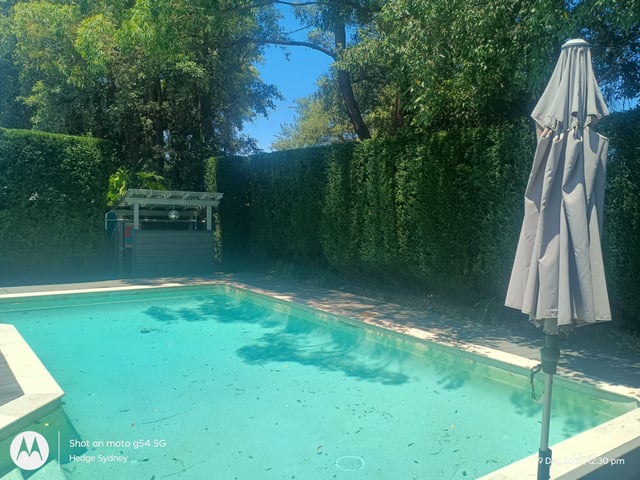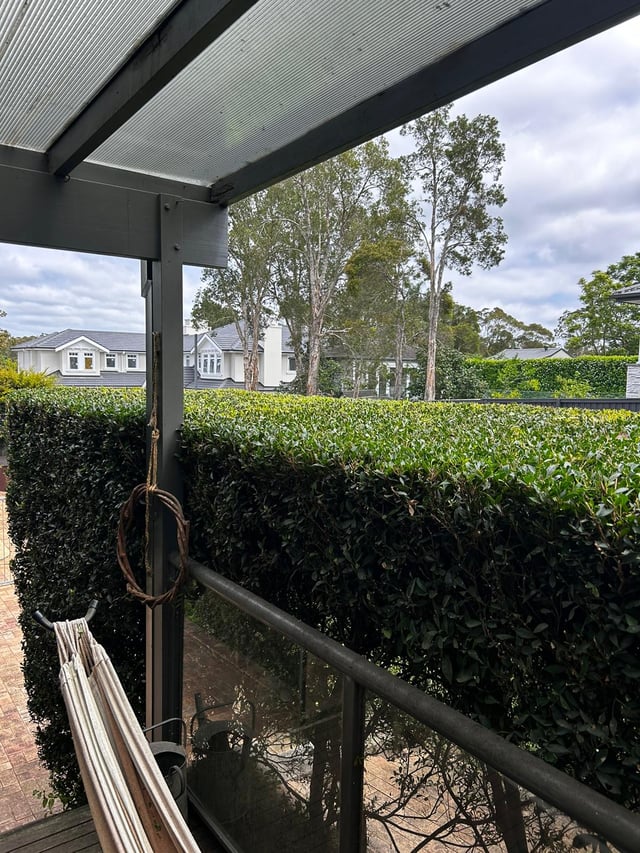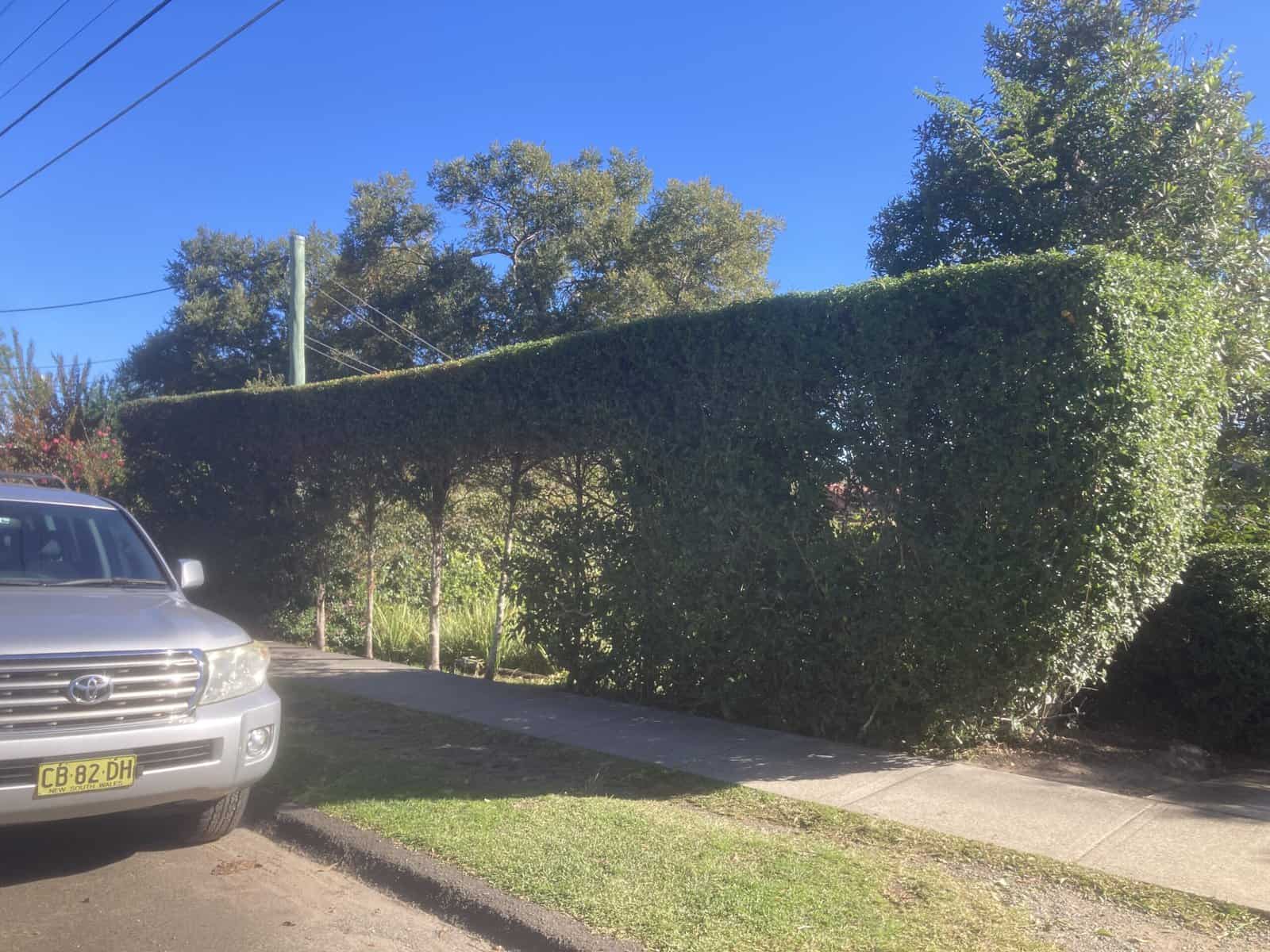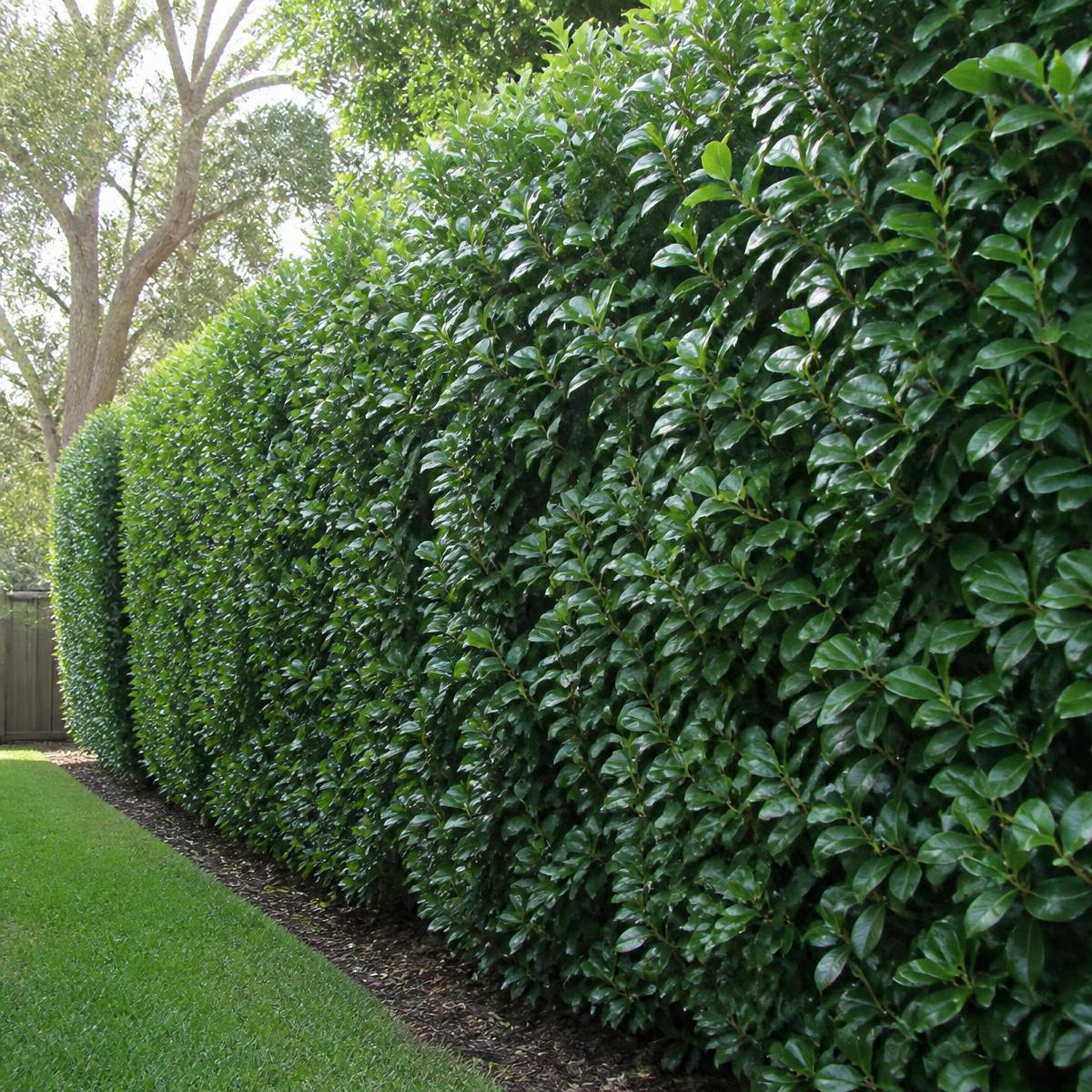
Sweet Viburnum (Viburnum odoratissimum) has earned its place as one of Sydney's most popular privacy hedges. It grows quickly, carries large glossy leaves, handles full sun to part shade and recovers well from hard pruning. That toughness can make it easy to overlook early warning signs. Most Viburnum hedge problems start small — a few silvered leaves, a sticky film on the foliage or one plant yellowing at the end of a row — and are simple to fix when caught early. Left alone, the same problems can strip a section of hedge bare within a season.
Thrips: silver, mottled leaves
Thrips are the most common pest on Viburnum in Sydney, especially through hot, dry spells from late spring to autumn. These tiny insects rasp the leaf surface and suck out the sap, leaving a silvery or bronzed, mottled look, often with small black specks of excrement on the underside. Heavily affected hedges look dull and tired from the street, and new growth can emerge distorted. Hedges in full sun against hot walls or fences are hit hardest. Keep plants well watered, because drought-stressed Viburnum is far more attractive to thrips, and hose the foliage occasionally to knock populations back. For established infestations, a targeted horticultural treatment applied to both sides of the leaves, repeated as directed, is usually needed. Our hedge pest and disease service covers thrips treatment across Sydney.
Scale insects and sooty mould
Scale insects appear as small brown, white or waxy bumps clustered along stems and leaf veins. They feed on sap and excrete honeydew, a sticky residue that coats the leaves below. A black, soot-like fungus called sooty mould then grows on that honeydew. Sooty mould does not infect the plant directly, but it blocks light, weakens growth and makes the hedge look dirty. If you notice ants travelling up and down the stems, check closely for scale — ants farm the insects for their honeydew and protect them from natural predators. Treat the scale first with horticultural oil or a suitable systemic product; once the scale is gone, the sooty mould weathers off over the following weeks.
Aphids on soft new growth
Aphids cluster on the tender tips of Viburnum after a trim or in spring flushes, causing curled leaves and adding to the honeydew problem. Small infestations can be squashed or hosed off, and ladybirds and lacewings will often keep them in check. It is one reason we time hedge trimming carefully — a heavy cut followed by a burst of soft regrowth can invite a flush of sap-sucking pests.
Root rot and poor drainage
Viburnum hates wet feet. On Sydney's heavy clay soils, or where garden beds collect run-off, roots can be attacked by Phytophthora and other root-rot organisms. Signs include yellowing or wilting leaves even when the soil is moist, plants dying one at a time along the row, and dark, mushy roots when you dig around the base. There is no reliable cure for a badly rotted plant, so prevention matters: improve drainage before planting, mound beds on clay, avoid over-watering automatic systems and keep mulch clear of the trunk. Replace lost plants with healthy stock — our Sweet Viburnum plants are available in 200mm, 300mm and 400mm pots to match an existing hedge.
Leaf spot and powdery mildew
In humid summers and shaded, crowded positions, Viburnum can develop fungal leaf spots — brown or purplish blotches that may drop out to leave holes — and powdery mildew, a white dusting on the leaf surface. Both thrive where air movement is poor. Thin a few interior stems when you trim, water at the base rather than over the foliage, and clean up fallen leaves. Most outbreaks are cosmetic and clear once conditions dry out, but persistent infections may need a fungicide.
Browning, sunburn and nutrient problems
Not every problem is a pest. Leaves that turn brown and crispy at the edges after a heatwave are usually sunburn or water stress, particularly on newly planted hedges. Pale yellow leaves with green veins point to iron or magnesium deficiency, common in alkaline soils near concrete foundations. A slow-release fertiliser in spring, deep but infrequent watering and a good layer of mulch solve most of these issues. Bare lower stems are normally a pruning issue: a hedge trimmed wider at the top than the base shades out its own lower foliage.
Overgrowth and hard pruning stress
Viburnum grows so vigorously that many Sydney hedges simply outgrow their space. A severe reduction is possible, but timing matters. Read our guide on how far you can cut back a Viburnum hedge before taking the saw to an old screen, and support the plant with water and fertiliser afterwards so the regrowth stays healthy and pest-free.
Keeping your Viburnum hedge healthy
The best defence is a vigorous plant. Choose a well-drained position, water deeply through the first summer, feed in spring, trim lightly and regularly, and inspect the hedge every few weeks — the underside of the leaves tells you most of what you need to know. Learn more about the variety on our Viburnum plant page, browse our full range of hedging plants, or, if you need a screen fast, see our instant hedges. If your hedge is already showing silvering, sticky leaves or dying plants, book a pest and disease inspection and we will diagnose the cause and recommend the right treatment.