The choice between weekly and fortnightly mowing depends on your grass type, how neat you want the lawn to look, and your budget. In Sydney's growing season, a lawn can add several centimetres of growth in just a week, so the gap between cuts matters.
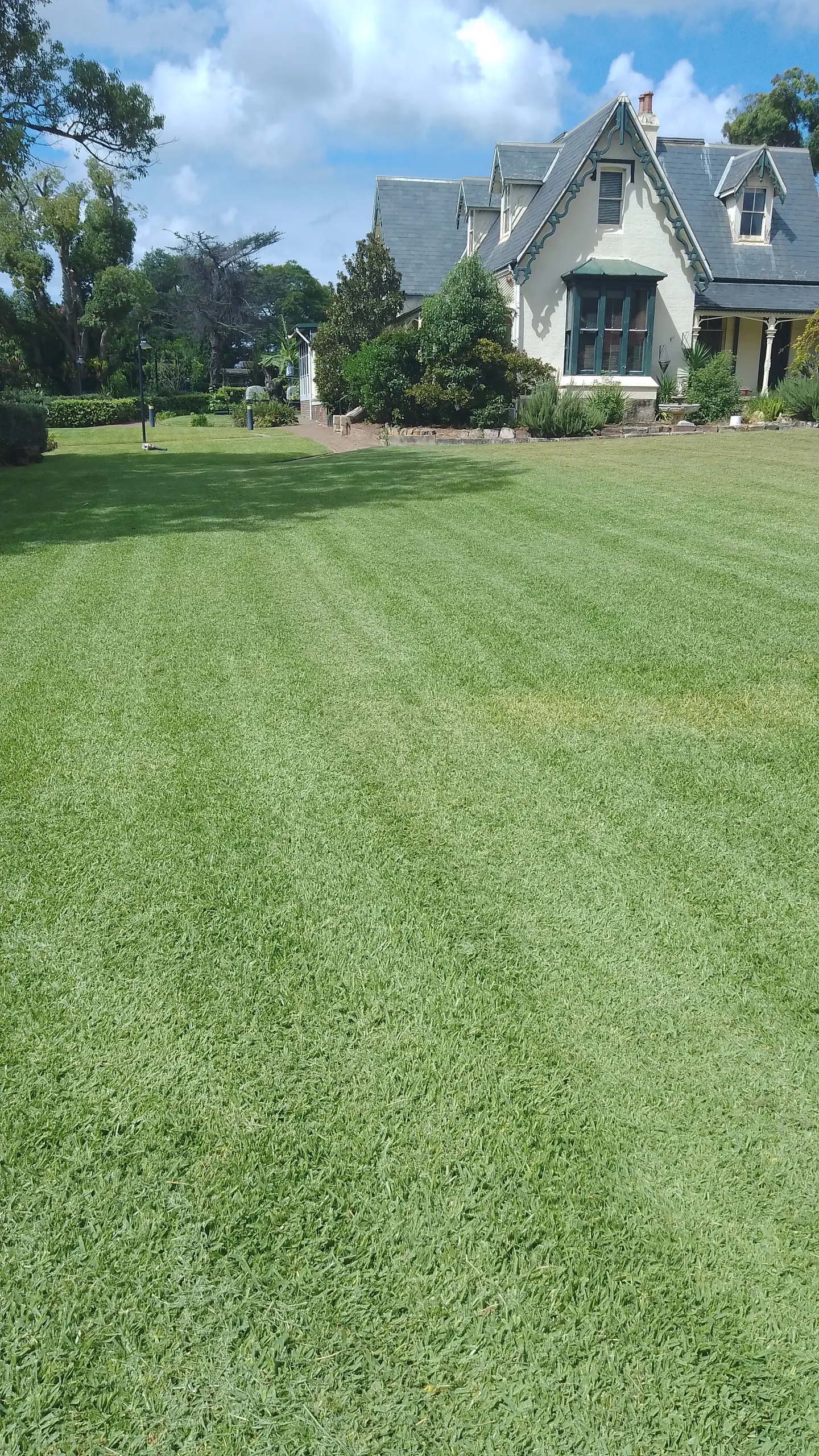
Weekly mowing is best for formal lawns and fast-growing grasses such as Kikuyu and Couch. It keeps the height consistent, prevents the lawn from looking shaggy, and means each cut removes only a small amount of leaf. Less clippings per mow also means less thatch build-up and a finer finish.
Fortnightly mowing works well for slower-growing lawns such as Buffalo, or during cooler months when growth has slowed. The lawn may look slightly less manicured in the second week, but it is usually a more economical option. The key is not to let the grass grow so long that the mower has to remove more than one-third of the blade.
For many Sydney homeowners, a flexible schedule works best: weekly in spring and summer, fortnightly in autumn and winter. Combining regular mowing with edging, fertilising and seasonal weed control gives the best result over the year.
There is a practical rule underneath the schedule debate: the one-third rule. If your target height is 40 mm, you should mow once the lawn hits roughly 60 mm. In Sydney's spring and summer that threshold is commonly reached in seven to ten days on Kikuyu and Couch, and ten to fourteen on Buffalo. Fortnightly only stays healthy if the growth rate lets you cut without breaching that third — which is exactly why the same fortnightly service that works beautifully in May produces a shaggy, clumpy result in November.
Cost per visit is not the same as cost per year. Weekly visits are individually cheaper because there is less material to cut and clear, and clippings can usually be mulched back into the lawn rather than carted away. Fortnightly visits cost more each time, especially in peak growth, and often add green-waste disposal. Over a full year the gap between the two schedules is usually smaller than people expect once catching, thatch treatment and weed remediation are included.
A blended arrangement suits most properties. Weekly or ten-day mowing from October to March, fortnightly through April and September, and three-to-four weekly across the coldest months matches the actual growth curve and avoids paying for cuts the lawn does not need. Bundling edging, blowing down and a seasonal fertilise into the same schedule keeps the finish consistent and avoids the two-week catch-up cuts that leave a lawn looking pale and uneven.