Buffalo grass has broad, soft leaves that do not respond well to close cutting. The recommended mowing height for most Buffalo varieties in Sydney is between 35 and 50 millimetres. In shaded areas, leave the grass slightly longer, around 50 to 60 millimetres, so each blade can capture more light.
In summer, aim for the lower end of the range, around 35 to 45 millimetres. The lawn will look neat and cope better with heat if it is not overgrown. In winter, raise the cut to 45 to 55 millimetres. The extra leaf length helps the grass photosynthesise during shorter days and protects the crown from cold damage.
Scalping is the biggest risk with Buffalo. If you cut into the crown or remove too much leaf at once, the lawn can turn brown and take weeks to recover. Always mow when the grass is dry, and never remove more than one-third of the leaf blade in a single pass.
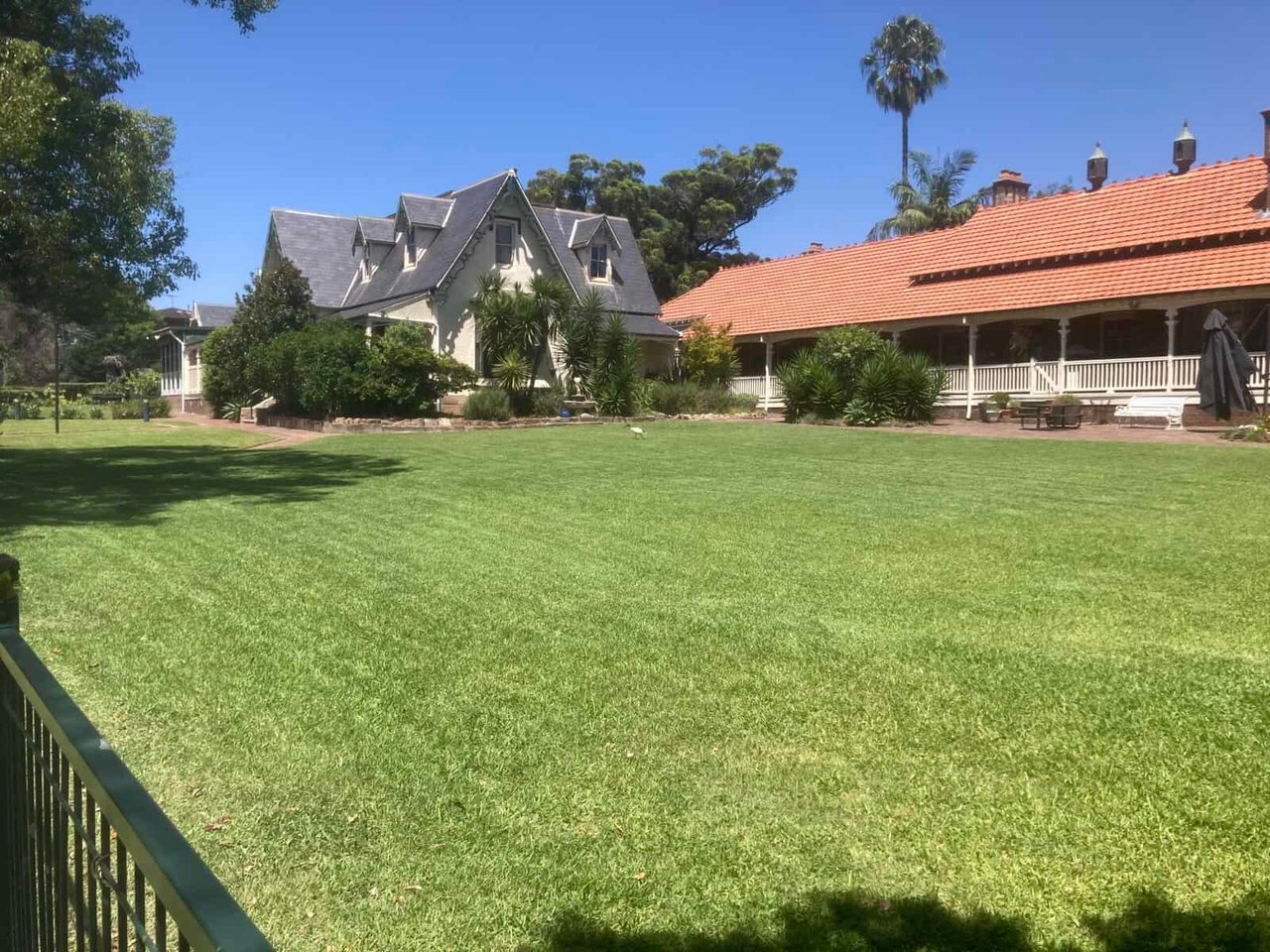
If your lawn has developed a thick thatch layer, consider dethatching in spring rather than trying to mow lower. A well-maintained Buffalo lawn, cut at the right height, will stay dense, green and comfortable underfoot all year round.
Cultivar differences are worth knowing. Modern soft-leaf selections such as Sir Walter, Palmetto, Matilda and Sapphire tolerate a slightly lower cut than older, coarser Buffalo, with Sapphire's finer blade handling around 30–40 mm comfortably. Older ST-type Buffalo does best kept at the upper end of the range. Whichever you have, the trend across all of them is the same: erring 10 mm high is far less damaging than erring 10 mm low.
Height also drives weed control and water use. A taller canopy shades the soil surface, which suppresses germination of bindii, winter grass and crabgrass and reduces evaporation, so the lawn stays green longer between waterings. Raising the cut before a heat wave or before a period away from home is one of the cheapest forms of drought insurance. Conversely, low mowing in summer exposes runners to direct sun and is the most common cause of the pale, straw-coloured lawns seen across Sydney in January.
Get the mower setup right before you worry about millimetres. Check the actual cutting height by measuring from a hard surface to the blade tip, since deck numbers are often optimistic, and make sure all wheels are set evenly or the cut will drift. Uneven ground scalps at the high spots regardless of setting, so topdress hollows and bumps with a sandy loam in spring rather than lowering the mower to compensate. Sharpen the blades at least twice per season; a clean cut heals in a day, while a torn leaf browns at the tip and gives the whole lawn a dull cast.